The risk isn’t crime.
It’s the scooter.
Thailand sits at Level 1 with the US State Department — the same category as Canada or Japan — and the crime a visitor actually meets is mostly a gem shop, not a mugging. The number that should change your packing list is different: the World Health Organization ranks Thailand 9th worst of 175 countries for road deaths, and 84% of those deaths are on two wheels. Bangkok, Phuket, Koh Samui and Chiang Mai are the places you’ll be. None of them are where the advisory's serious warnings sit.
The advisory, in plain words
Both governments agree: the country is Level 1, and two named border strips are not.
US — Level 1, exercise normal precautions
7 Jul 2026Updated 7 July 2026: Thailand nationally is Level 1, the lowest category, the same as most of Western Europe. Two exceptions sit inside the same document. Level 2, exercise increased caution, applies to Yala, Pattani and Narathiwat — periodic violence between Thai security forces and armed insurgents, with 17 districts under a standing state of emergency — and to the strip along the Cambodian border. Level 4, do not travel, applies specifically to the areas along that Cambodian border, where an armed conflict flared in 2025 and again that December. None of this touches Bangkok, Phuket, Koh Samui, Koh Phangan, Koh Tao, Chiang Mai or Pattaya.
UK — FCDO, and it draws the same two lines
8 Sep 2026Updated 8 September 2026, current as of 10 September 2026. The FCDO advises against all but essential travel to within 20km of the Cambodian land border — the Khao Phra Wihan temple area is closed and unexploded landmines are present — and separately against all but essential travel to Pattani, Yala and Narathiwat provinces plus four districts of Songkhla, citing regular attacks near the Malaysian border. It specifically names the Hat Yai–Padang Besar rail line as passing through that southern zone.
What actually happens
A gem shop, a jet-ski deposit, and a scooter with bald tyres — in that order of frequency.
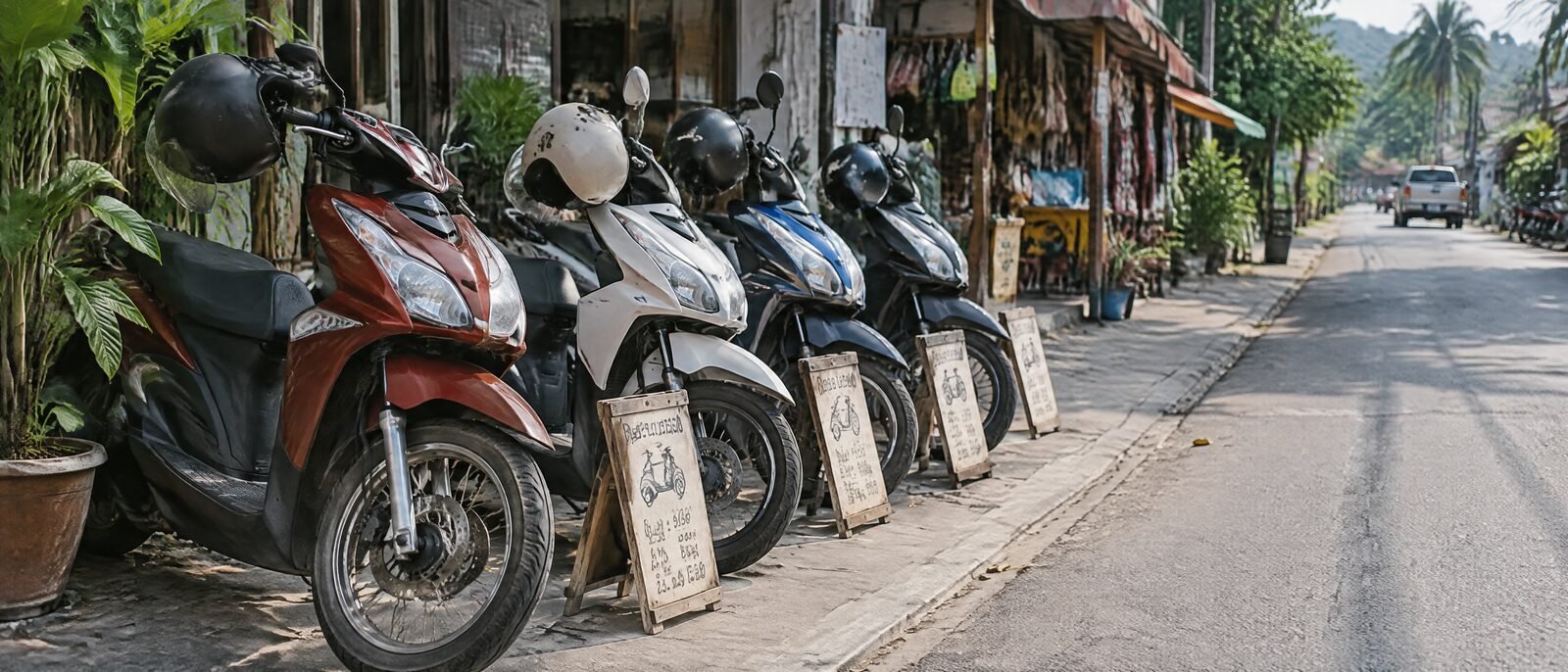
The scooter is the real risk
84% of deathsWHO's most recent global road safety report puts Thailand's road death rate at 25.4 per 100,000 people in 2021 — 9th worst of 175 countries it tracks — and motorcyclists made up 83.8% of those deaths, around 18,200 people that year, roughly 50 a day. The FCDO calls Thailand "one of the world's deadliest countries for fatalities on motorcycles" in its own advisory text. Neither government publishes a count of foreign tourists specifically killed or injured on Thai roads, and we could not find one anywhere else either — that gap is real, not filled in here with a guess.
The gem shop, and the "palace is closed" opener
Tourist Police: 1155The US Embassy in Bangkok names this directly: retailers claim tourists can buy wholesale gems or luxury goods to resell at a profit at home; the stones are typically glass or synthetic and effectively worthless. Tuk-tuk, taxi and bus drivers steer riders there on commission — the embassy names Bangkok, Chiang Mai, Pattaya and Phuket as where this concentrates. The most common opening move is being told the Grand Palace or Wat Pho is "closed today" by someone near the gate, who then offers a tuk-tuk to "another temple" that turns out to be the gem shop circuit. The palace's real hours are 08:30–15:30 daily, and it closes only for state or royal ceremonies.
Jet-ski and scooter deposit scams
Never your passportThe FCDO's own line: "do not hand your passport over as a guarantee, for example to motorcycle or jet-ski rental businesses. Companies may hold on to passports against claimed damage." The pattern on Phuket and Pattaya's beach strips is a claim of pre-existing scratches or dents surfacing only once you try to return the vehicle, with the passport held until you pay.
Drinks, drink spiking and full moon parties
Bars, lateThe FCDO: "violent sexual assaults and unprovoked attacks can happen in tourist areas across Thailand. Attacks are most common during full moon parties or similar events, and near bars late at night," and separately, "drink spiking and drug-assisted sexual assault does happen in tourist areas around Thailand, with male and female victims." Methanol-tainted alcohol is a distinct hazard the FCDO also names directly — "even small amounts of methanol can kill" — a warning about counterfeit and improperly distilled spirits generally, not tied to one dated incident.
Where you’ll be
Bangkok, the islands and Chiang Mai are three different logistics problems, not one.
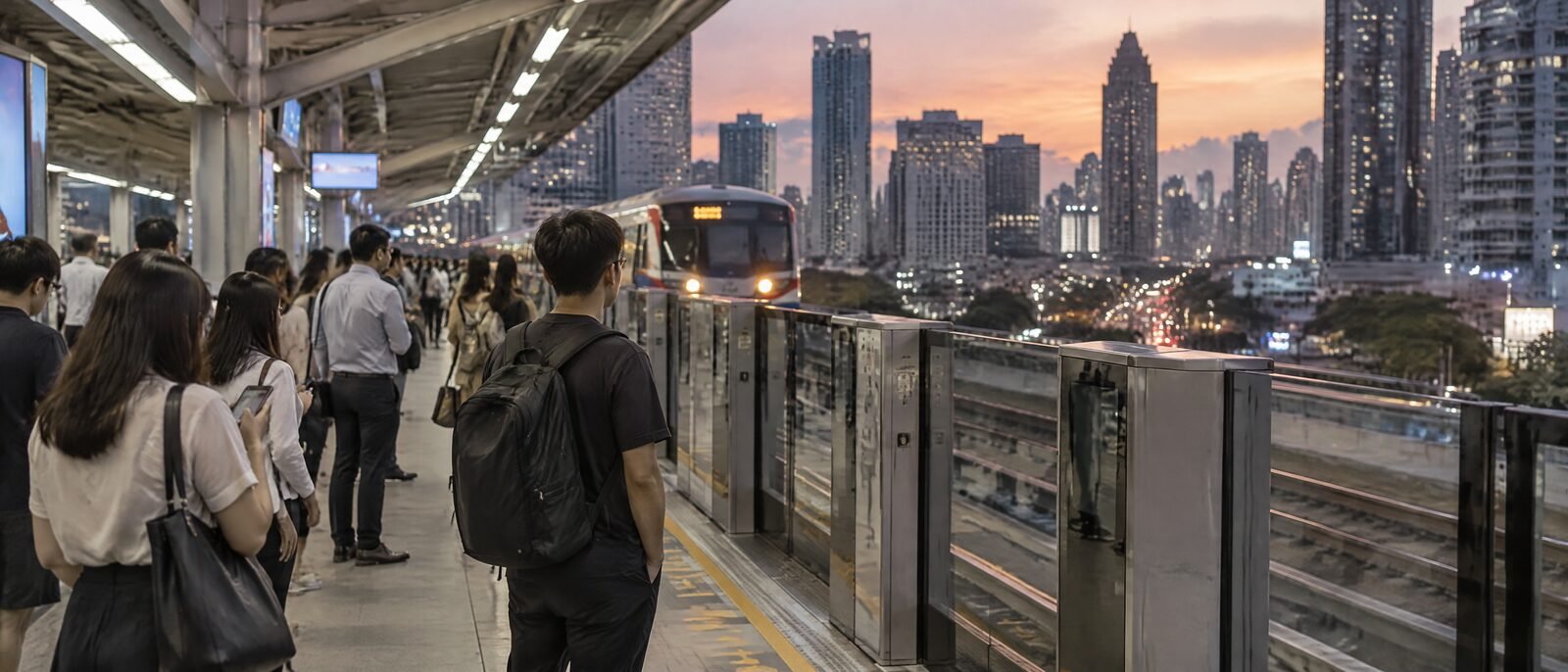
Bangkok
BTS and MRT are the safe defaultThe BTS Skytrain and MRT subway are the two systems visitors should default to for anything within the city — air-conditioned, metered by station, and outside the reach of the tuk-tuk commission economy. Khao San Road, Sukhumvit and the areas around Nana and Soi Cowboy are the tourist-scam-density zones the embassy names, not because they're more violent, but because that's where the gem-shop and bar-bill plays concentrate. Street food and markets are normal daytime activity; the caution is about who's steering you somewhere, not what you're eating.
Phuket, Koh Samui, Koh Phangan, Koh Tao
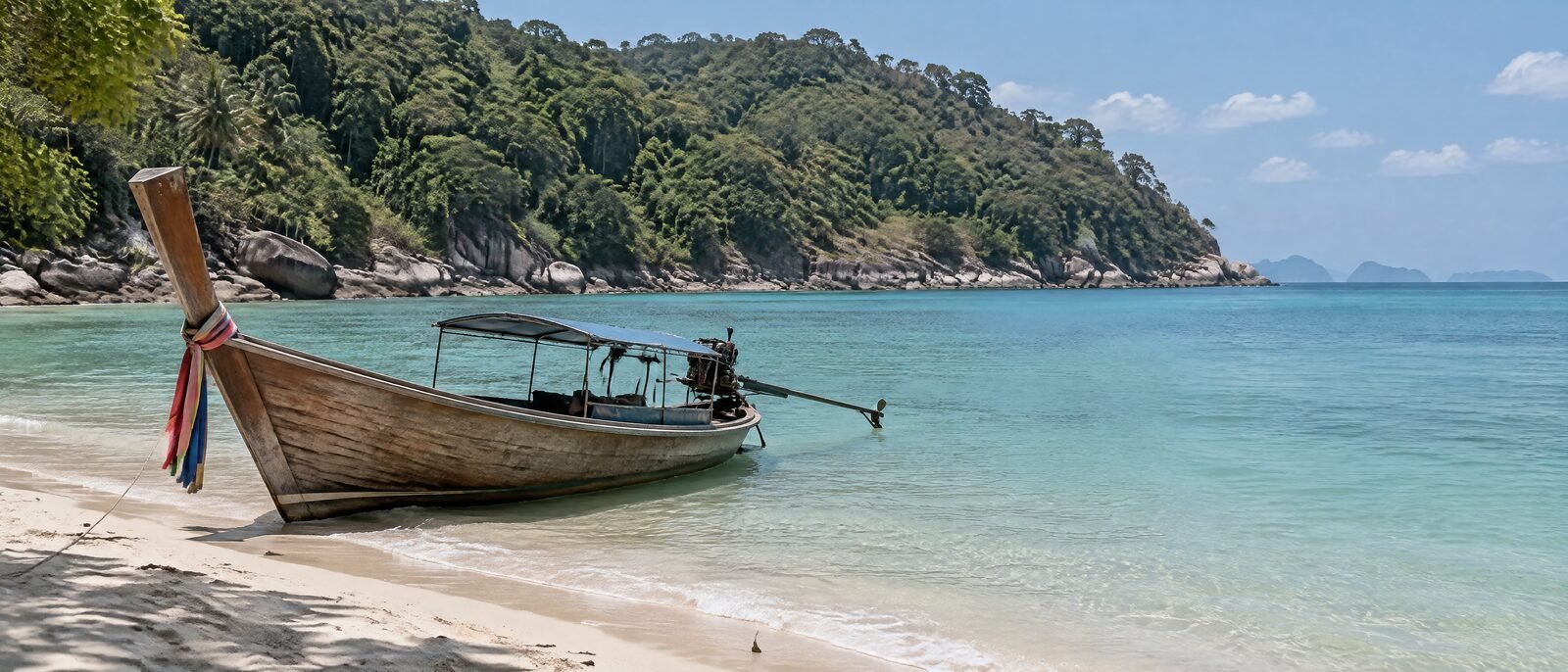
Monsoon changes the seaThese islands run on scooters and long-tail boats, which is exactly why the road and sea risks above land hardest here. FCDO: "take care when swimming off coastal areas, especially during monsoon season. People have drowned in strong riptides," and "jellyfish can swim close to shore, particularly during the rainy season from May to October" — stings that can be fatal. Beaches with lifeguards run a flag system; a red flag means stay out, not swim carefully.
Chiang Mai and the north
Same scam map, quieter cityChiang Mai sits on the embassy's same list of where gem and tour scams concentrate, but at a lower density than Bangkok or Phuket — it's a smaller, walkable old city with a well-established backpacker and digital-nomad presence. The road-death pattern is national, not Bangkok-specific, so a rented scooter on Chiang Mai's ring road or up toward Doi Suthep carries the same licence and helmet rules as anywhere else in the country.
Getting around
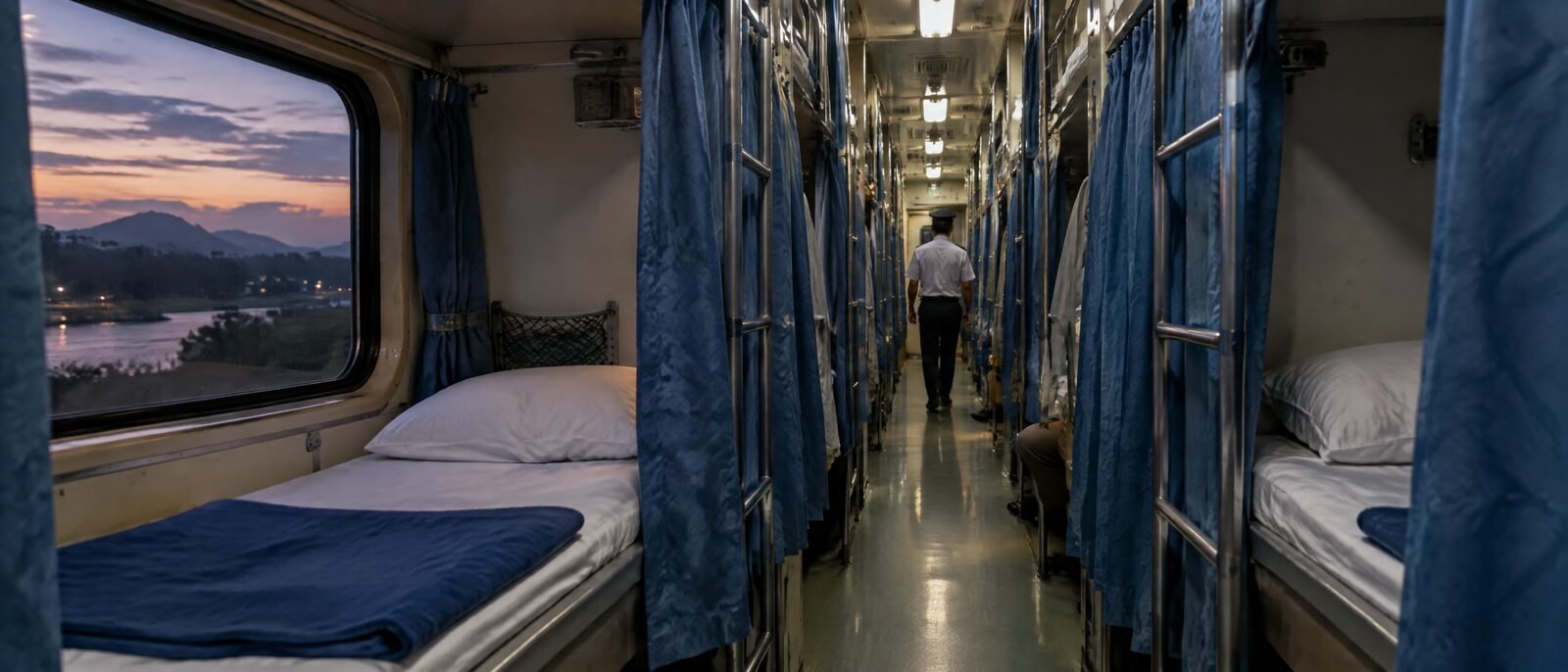
Rail and metro where they exist; a scooter is a decision, not a default.
If you rent a scooter anyway
IDP, category A, helmetBuy the International Driving Permit at home before you fly — the FCDO is explicit that you cannot buy one outside your home country. It needs to carry a motorcycle endorsement; a car-only permit does not cover a scooter, and insurers use exactly that gap to decline claims. Wear the helmet the law requires even when the rental shop doesn't ask you to. Police checkpoints in tourist zones do check documents.
Grab, metered taxis, and the BTS/MRT
Meter or app, not a quoteGrab works the same way it does elsewhere — fare fixed before the ride starts, driver and plate verified in-app. Metered taxis are fine if the driver actually runs the meter; if he won't, that's the signal to leave. In Bangkok, the BTS and MRT are faster than traffic at almost any hour and remove the fare-negotiation problem entirely.
Widely believed and wrong
One myth undersells the real risk, one oversells it, and one is just an old headline.

“It's a dangerous country”
Thailand is Level 1 nationally with the US State Department — the same category as most of Western Europe. Violent crime against tourists is, in the FCDO's own words, rare. The two areas either government tells you to avoid are a strip along the Cambodian border and three southern provinces on the Malaysian border — neither anywhere near Bangkok, Phuket, Chiang Mai or the Gulf islands.
“The scooter is basically fine”
This is the one that actually costs people. Thailand ranks 9th worst of 175 countries WHO tracks for road deaths, and 84% of those deaths are motorcyclists. Most rental scooters handed to tourists are, in the FCDO's words, "often unregistered and cannot be used legally on a public road," and a missing motorcycle-category licence is a routine reason insurers refuse to pay after a crash. This is the risk that dwarfs crime here, not a footnote to it.
“You need malaria pills everywhere in Thailand”
Malaria and dengue both appear on the FCDO's health-risk list for Thailand, but the risk is not uniform, and Bangkok, Phuket, Chiang Mai and the main tourist islands are low-risk for malaria specifically — the disease concentrates in forested and border areas most visitors never enter. Dengue, spread by day-biting mosquitoes, is the one worth actually planning around with repellent, wherever you are in the country.
If something happens
One number is the one to call first; the rest are what it connects you to.
Emergency numbers
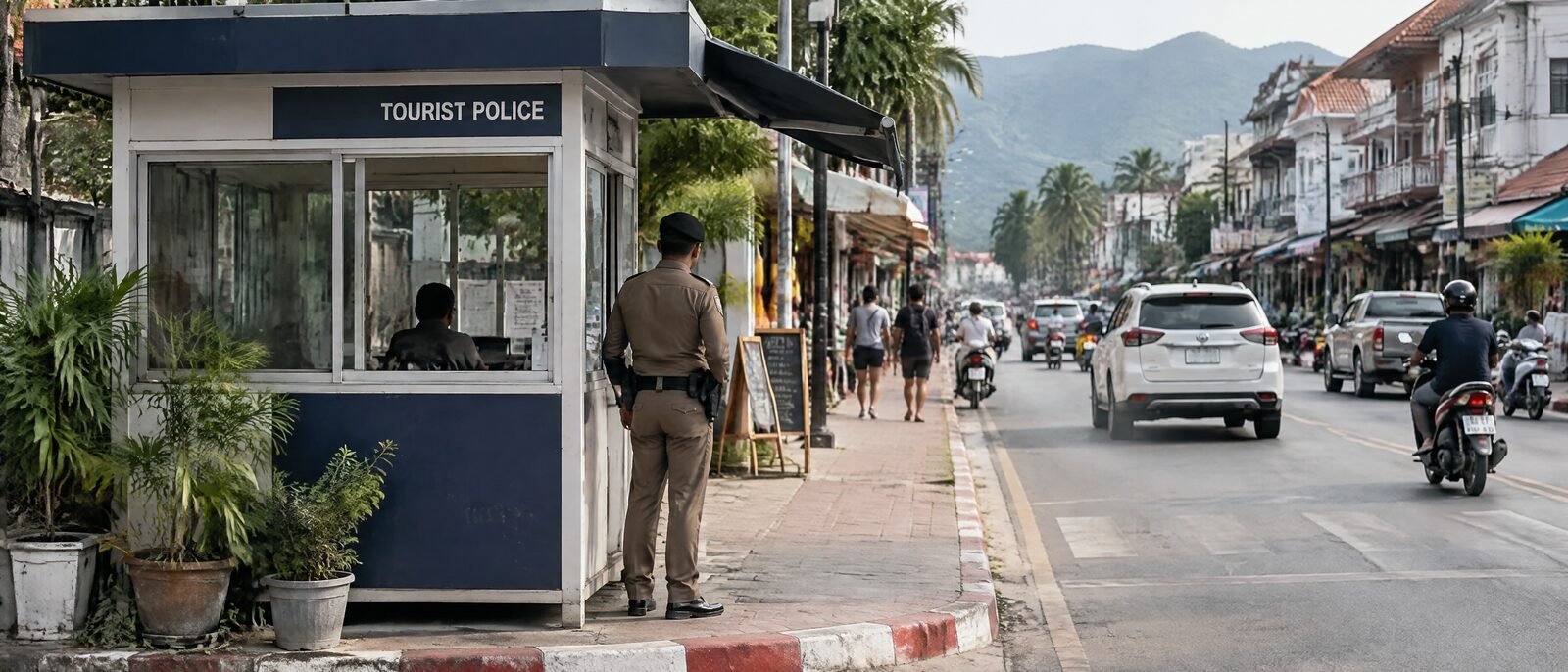
Tourist Police: 11551155 is the Tourist Police — 24 hours, English-speaking, and the number the US Embassy in Bangkok directs scam victims to. General police and emergency is 191, fire 199, ambulance 1669. These three are the standard, widely published numbers for Thailand; we lean on 1155 as the first call for anything tourist-related because it is the one with a direct embassy-linked confirmation in this research.
Hospitals and payment
Guarantee of payment, upfrontThe FCDO is direct: "all hospitals require a guarantee of payment before treating patients. Make sure you have adequate health insurance." Private hospitals are described as high standard but expensive; public hospitals and clinics "do not always meet UK standards, particularly outside Bangkok." In practice this means travel insurance is not optional paperwork here — it is what gets you seen.
Health and environment
Rain, jellyfish and rip currents matter more here than most guides let on.
Monsoon season, riptides and jellyfish
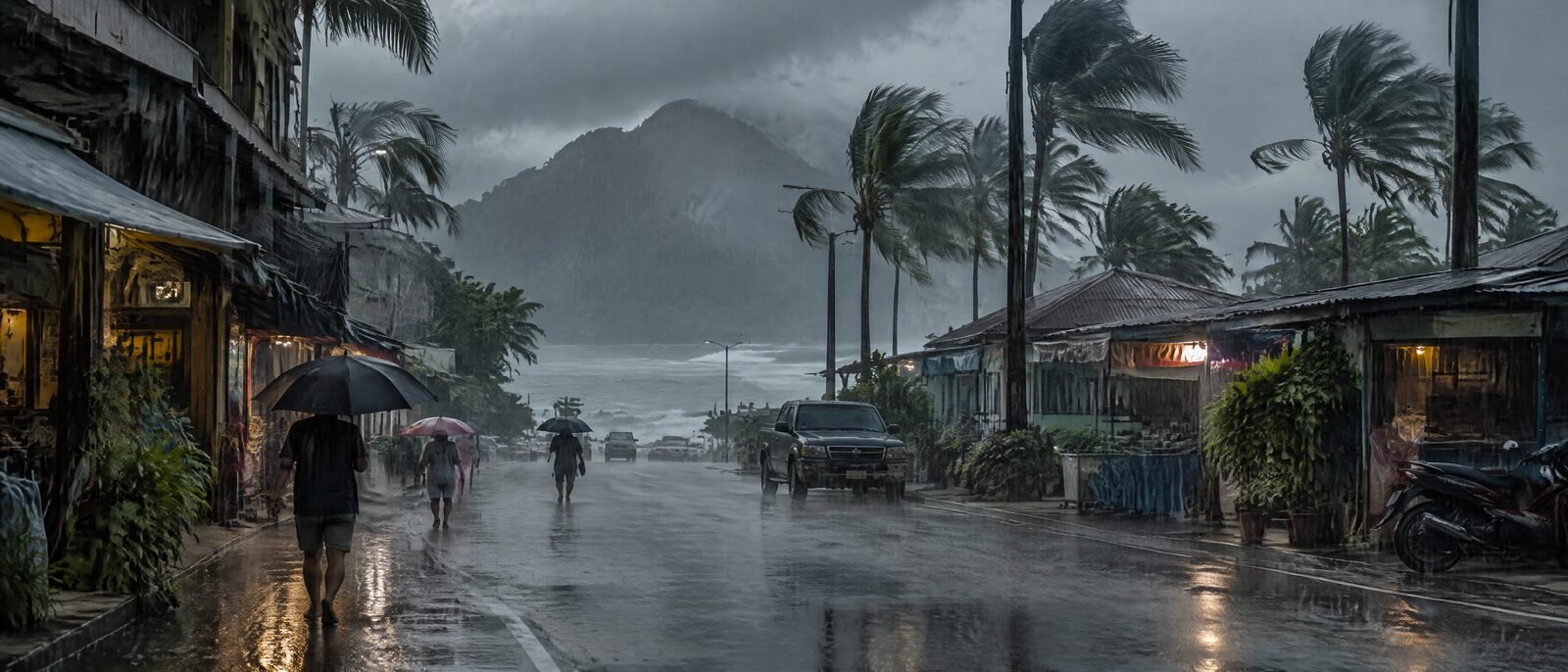
May–OctThe rainy season runs roughly May to October, and it is not just an inconvenience: the FCDO's own line is "people have drowned in strong riptides" during this period, and jellyfish move closer to shore across the same months, with stings that "can be fatal." Follow the beach flag system where one exists — a red flag means the water is genuinely unsafe that day, not merely rough.
Dengue, malaria and rabies
Repellent, daytimeDengue is spread by day-biting mosquitoes and is present across urban and rural Thailand alike, including Bangkok; malaria risk is concentrated in forested and border areas, not the main tourist circuit. Rabies is present in the country's street-dog and monkey population. If bitten or scratched by any animal, treat it as a medical event, not a story — seek treatment immediately rather than waiting to see if symptoms appear.
Go anywhere. Come back.
Thailand's real risk list is short and specific: the scooter, the gem shop, the monsoon sea. Advisories change without notice — check what has moved, then run the pre-trip list once.