Six states say do not travel.
This is not one of them.
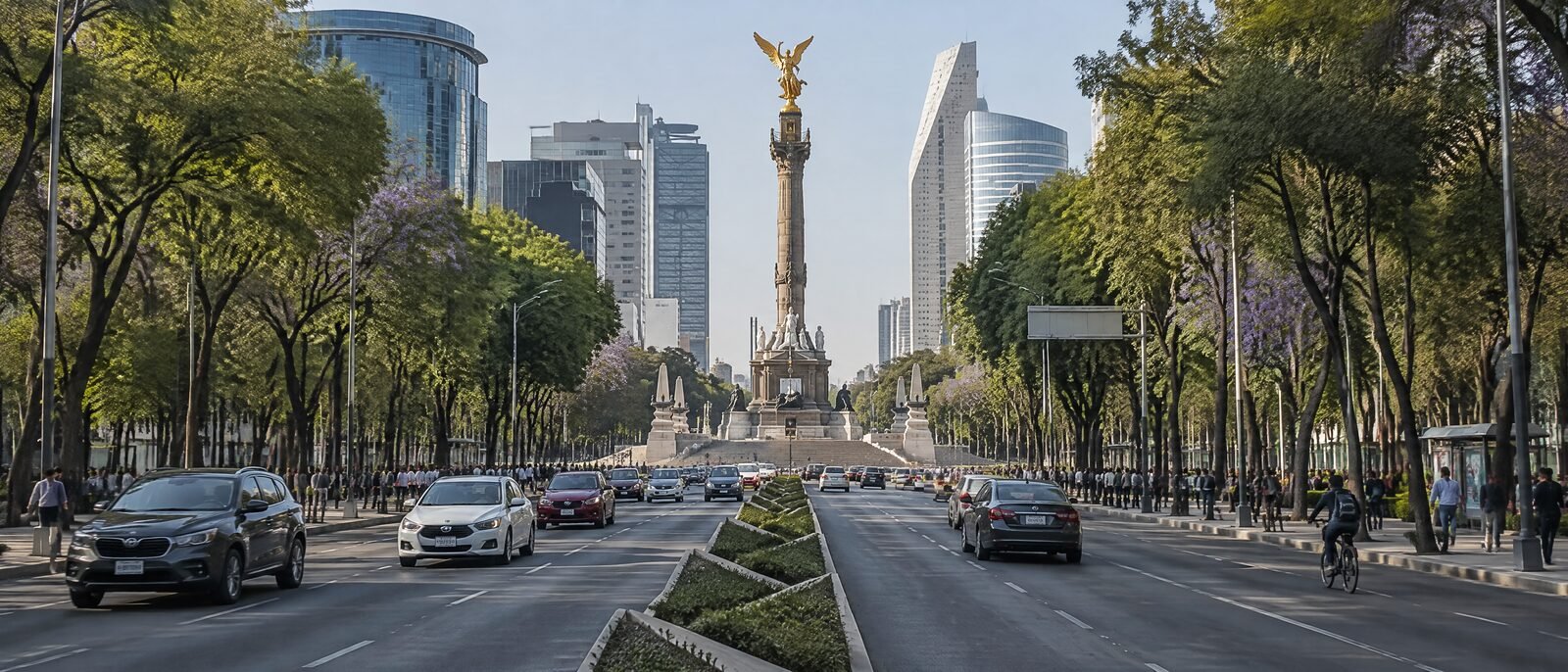
The US State Department rates six Mexican states Level 4, Do Not Travel, and bars its own employees from every part of Guerrero — including Taxco, three hours’ drive away. Mexico City is Level 2, and its entry carries a line the Department does not print for much of the country: there are no specific restrictions on travel for US government employees in Mexico City. The city recorded 817 homicides in 2025, nine per 100,000, down 16.4%. What you manage here is crowds, phones and the taxi you flag.
The advisory, in plain words
The country’s reputation and the capital’s rating are two different documents.
US — Level 2, and the sentence under it
Read 20 Aug 2026Date issued on the page: 29 May 2026, read 20 August 2026. Risks cited: terrorism, crime, kidnapping. Mexico City’s entry notes frequent petty crime in tourist and non-tourist areas — then: “There are no specific restrictions on travel for U.S. government employees in Mexico City.” Elsewhere it curfews staff or bars whole states. Level 4 is Colima, Guerrero, Michoacán, Sinaloa, Tamaulipas and Zacatecas; seven states are Level 3; everything else, CDMX included, is Level 2 (travel.state.gov).
UK — the FCDO does not advise against Mexico City at all
Updated 19 Aug 2026The banner warns against all but essential travel to parts of Mexico. Mexico City is not among them: the list runs Tijuana, Tecate, Chihuahua state, Sinaloa, Tamaulipas, Zacatecas, southern Guanajuato, Michoacán, parts of Jalisco, Colima, Guerrero including Acapulco, and a 40 km strip of the Chiapas border (gov.uk, updated 19 August 2026). For “the Centre” it warns about the State of México — armed robbery on public transport, highway vehicle theft — not CDMX.
What actually happens
Five patterns cover nearly everything that reaches a visitor to the central boroughs.
“Te acorralan” — they box you in
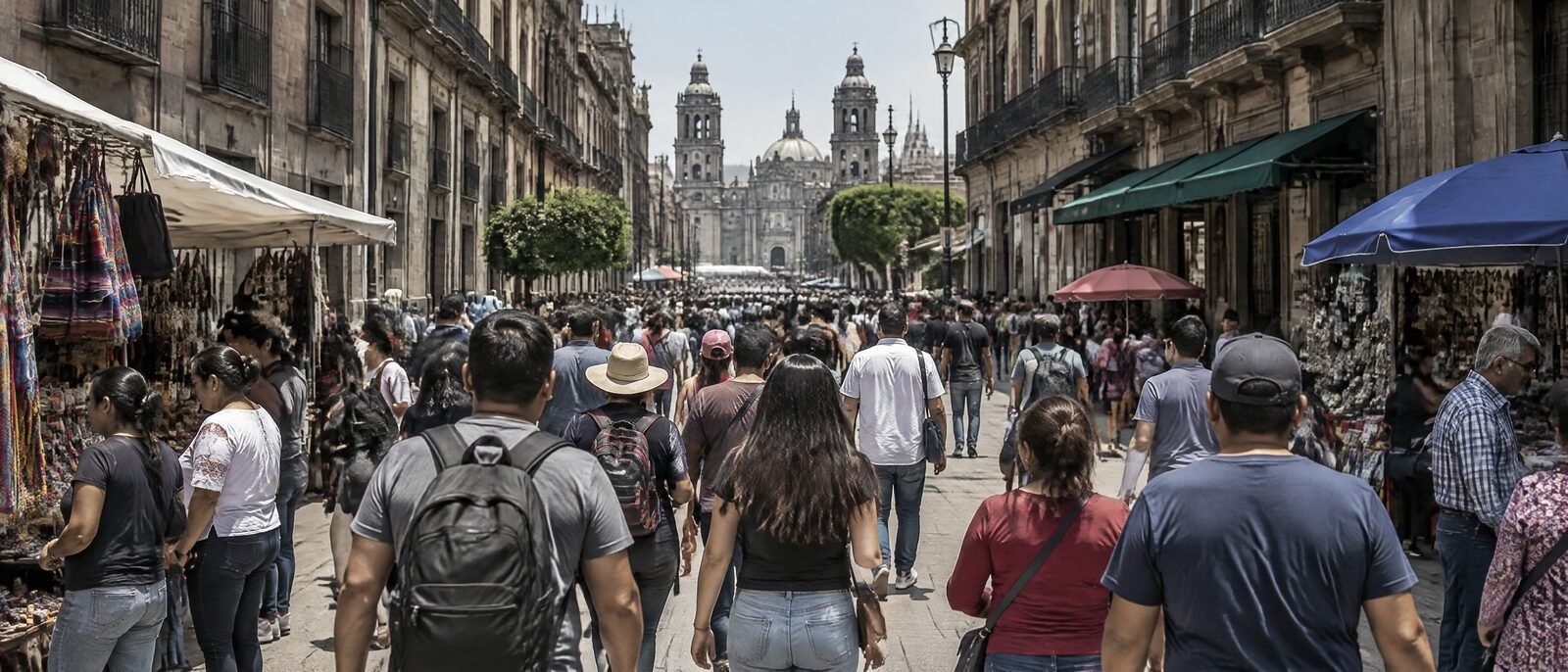
Madero, Eje CentralFour to six people move as one unit: one stops dead in front of you, two take the flanks, one closes behind. The pressure removes your ability to turn and disguises a hand in your bag as crowd contact. It is called te acorralan. Victims name Madero, Eje Central, Correo Mayor and Pino Suárez, and Metro entrances. The Centro Histórico carries over half a million people a day (Proceso, 9 Oct 2025). The same crew structure works buses.
The taxi you raise your hand at
The one hard ruleUS government employees anywhere in Mexico must use dispatched vehicles from regulated stands or apps like Uber or Cabify, and may not wave down taxis (travel.state.gov). The FCDO: unlicensed drivers have robbed and assaulted passengers, including in Mexico City. The city prosecutor’s own finding is that express kidnapping “is committed most regularly in hire vehicles” — as in January 2026, when a man boarded a taxi pirata in Iztapalapa, was beaten, emptied of his cards and released in Ajusco (MVS Noticias, 12 May 2026).
Phones, cash machines and watches
Inside the branchPhone snatching is the volume crime: moto-snatches at lights on Álvaro Obregón and Insurgentes, lifts off café tables in Roma and Condesa. A widely quoted 720,000 thefts a year comes from a CDMX agency page that returned nothing when fetched on 20 August 2026 — unconfirmed. Register your IMEI anyway; a blocked IMEI makes the handset worthless to resell. For cash, use ATMs inside bank branches in daylight — BBVA, Banorte, Santander and HSBC in Roma Norte, Condesa and Polanco — not machines in OXXO shops.
The phone call, and the fake police stop
Hang upExtortion incidence fell 9.33% from 2025 to 2026 even as complaints rose, because more people report. Eighty-five per cent of attempts are phone-based and fail; the Consejo Ciudadano’s own line is that the best tool against extortion is hanging up (La Jornada, 16 Aug 2026). The virtual-kidnap tell: unknown number, extreme urgency, an instruction not to hang up, screaming behind. Ring the “victim” directly instead.
“Monta rentas” — the rental that isn’t
Check the administraciónThe dominant new CDMX fraud of 2026, and it works because the scammer really does have keys. He short-lets a furnished flat on Airbnb for a night or two, advertises it long-term in Facebook groups, takes a deposit and hands the keys over — then the building administration evicts the victim. In February 2026 a 29-year-old paid 23,000 pesos for a flat in Parques Polanco and was evicted next morning (La Silla Rota, 2 Mar 2026).
Where you’ll be
The operative unit is the colonia, and one boundary is a road with no sign on it.
Roma Norte, Condesa, Juárez
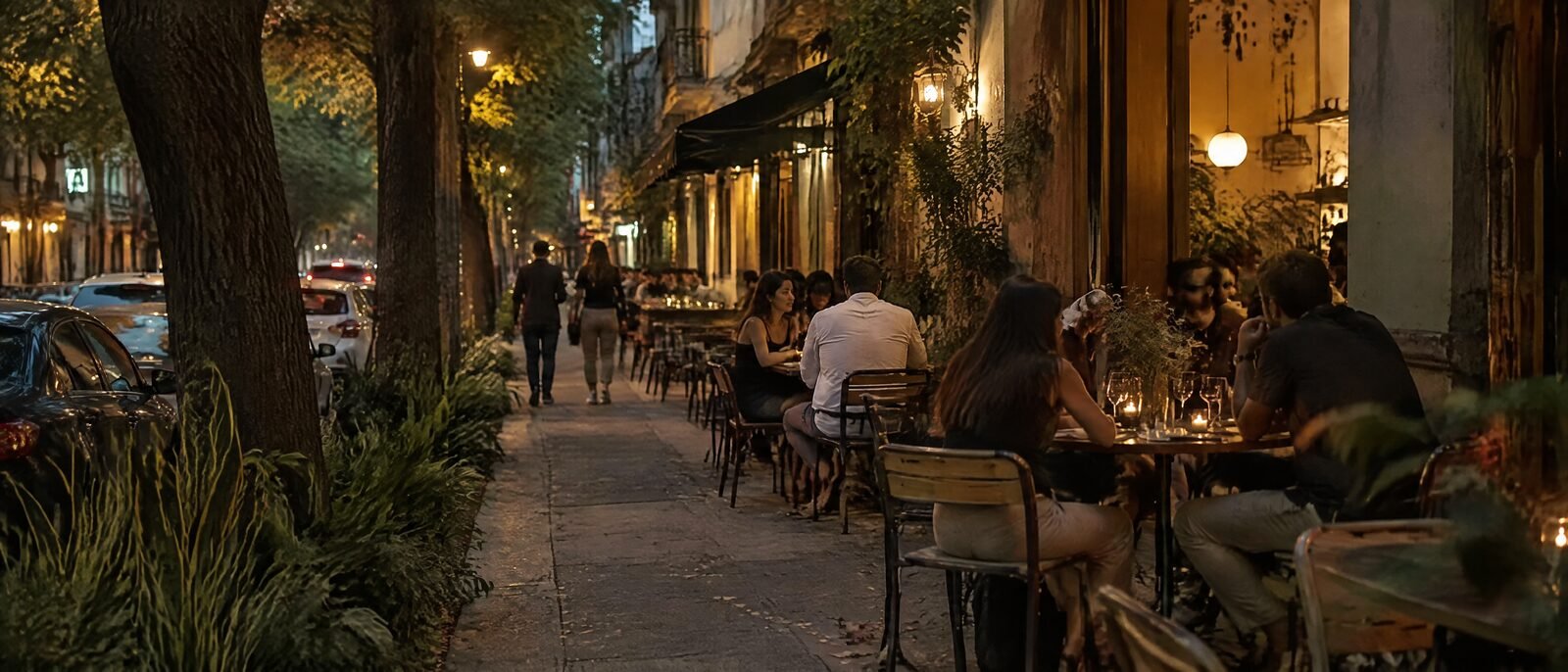
Busy to 02:00Roma Norte holds the densest concentration of foreign visitors in the city, and the risk is opportunistic: phone off the café table, bag off the chair. After dark Orizaba, Colima, Córdoba and Álvaro Obregón stay busy to roughly 02:00; in Condesa, Parque México and Parque España are used until late while Nuevo León, Michoacán, Amsterdam and Tamaulipas thin out after 01:00. In Juárez the Havre and Versalles end is Roma Norte’s twin, while Zona Rosa proper — Génova, Amberes, Niza, Hamburgo — changes character hard after midnight.
The Centro Histórico, and one road called Eje 1 Norte
Memorise itBy day this is one of the most heavily policed square kilometres in Latin America. In May 2026 the SSC merged the Centro and Alameda sectors into one unit: 686 officers, 45 patrol vehicles, 7,000 monitored cameras over a 5 km² perimeter running from Eje 1 Norte and Circunvalación round to Izazaga, Bucareli and Eje Central (Proceso, 27 May 2026). South of Eje 1 Norte — Zócalo, Templo Mayor, Madero, Bellas Artes, Alameda — you are inside it. North of it you are in Tepito — no signage, no barrier, one wide road. The SSC attributes to La Unión Tepito control of drug distribution along the Eje 1 Norte corridors and at Plaza Garibaldi, busy and policed on a Friday, thin on a Tuesday. Don’t go to the tianguis.
Polanco, Del Valle, Coyoacán, San Ángel, Escandón
Different clocksPolanco is walkable at night on Presidente Masaryk, Emilio Castelar and around Parque Lincoln. Del Valle, in Benito Juárez, is the lowest-crime borough on multiple measures — gridded and well lit, fine on foot at night on Félix Cuevas and Adolfo Prieto. Coyoacán is comfortable into the evening at weekends around Jardín Centenario and the Frida Kahlo house on Londres, but midweek after 22:00 the surrounding streets are quiet and unlit. San Ángel is a Saturday phenomenon. Escandón, across Patriotismo, differs from Condesa only in lighting — stay on Patriotismo and Benjamín Franklin.
Getting around
The airport transfer changed in March 2026; the second airport changed in April.
AICM — the trap is the tout, not the taxi
Buy at the kioskBuy a fixed-price ticket at an official kiosk inside the terminal, then present it at the vehicle. Anyone who approaches you inside arrivals offering a car is outside that system. Verified March 2026 fares for the 15 km run to Alberca Olímpica: T&M 275 pesos, Yellow Cab 415, Taxi Nueva Imagen 425, against Uber X at 189.94 and DiDi at 125 (Expansión, 11 Mar 2026).
AIFA — take the train, and this is new
45 pesosFelipe Ángeles sits 45 km north in Zumpango, in the State of México. Until this year the only transfer was a long road trip through Edomex — the state the FCDO flags for armed robbery on public transport and highway vehicle theft. Since 26 April 2026 there is a direct rail link: the Tren Felipe Ángeles from Buenavista, about 43 minutes, 45 pesos, roughly every 15 minutes, Monday to Friday 05:00–00:00, last train 23:30 (Proceso, 26 Apr 2026).
Metro, Metrobús, ride-hail and driving
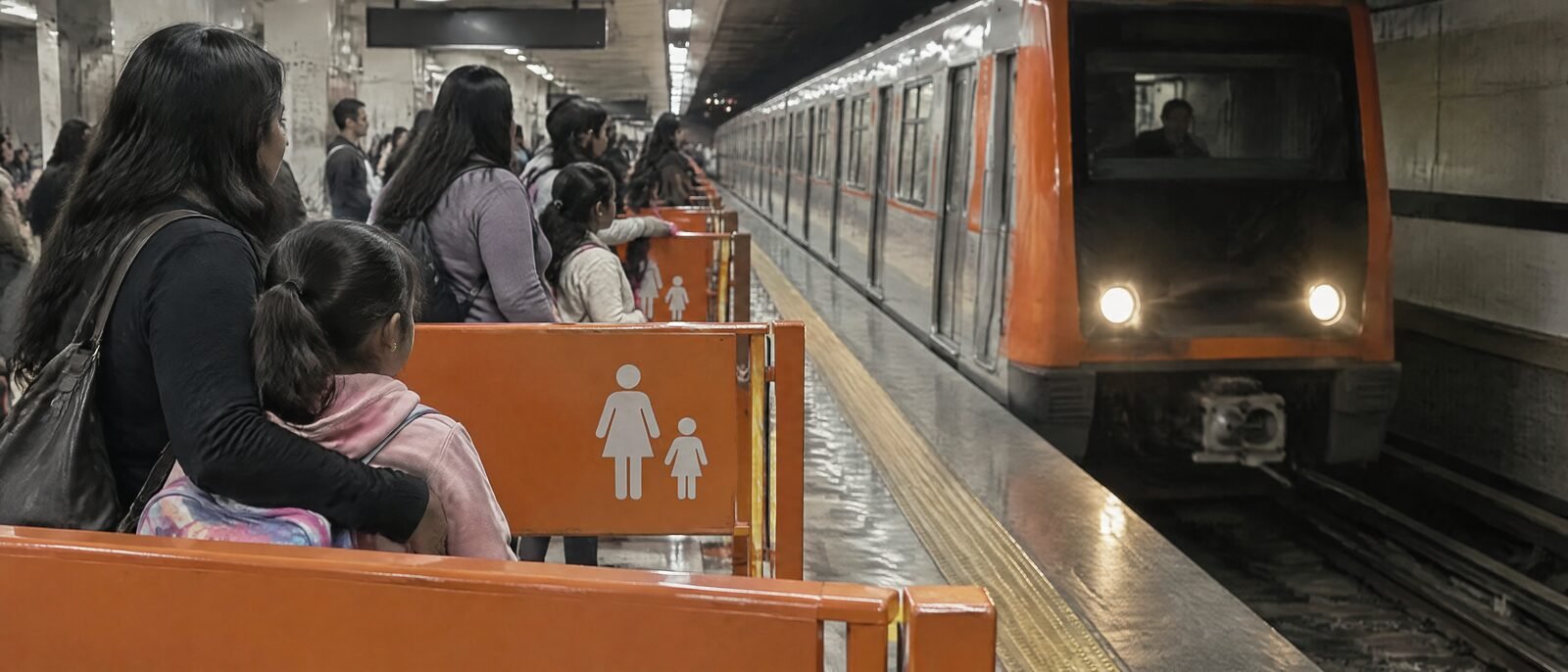
5 pesos flat2026 fares: Metro 5 pesos flat, Metrobús 6 — except Line 4 to the AICM terminals at 30. The first two carriages of each Metro train are reserved for women and children under 12, marked by orange barriers; on Metrobús the reserved area is at the rear. The FCDO is blunt that women travelling alone on public transport have been harassed, robbed and sexually assaulted. Driving: cars without Edomex or CDMX plates may not enter Mon–Fri 05:00–11:00 or Sat 05:00–22:00.
Widely believed and wrong
Three beliefs that drive most bad decisions about this city.
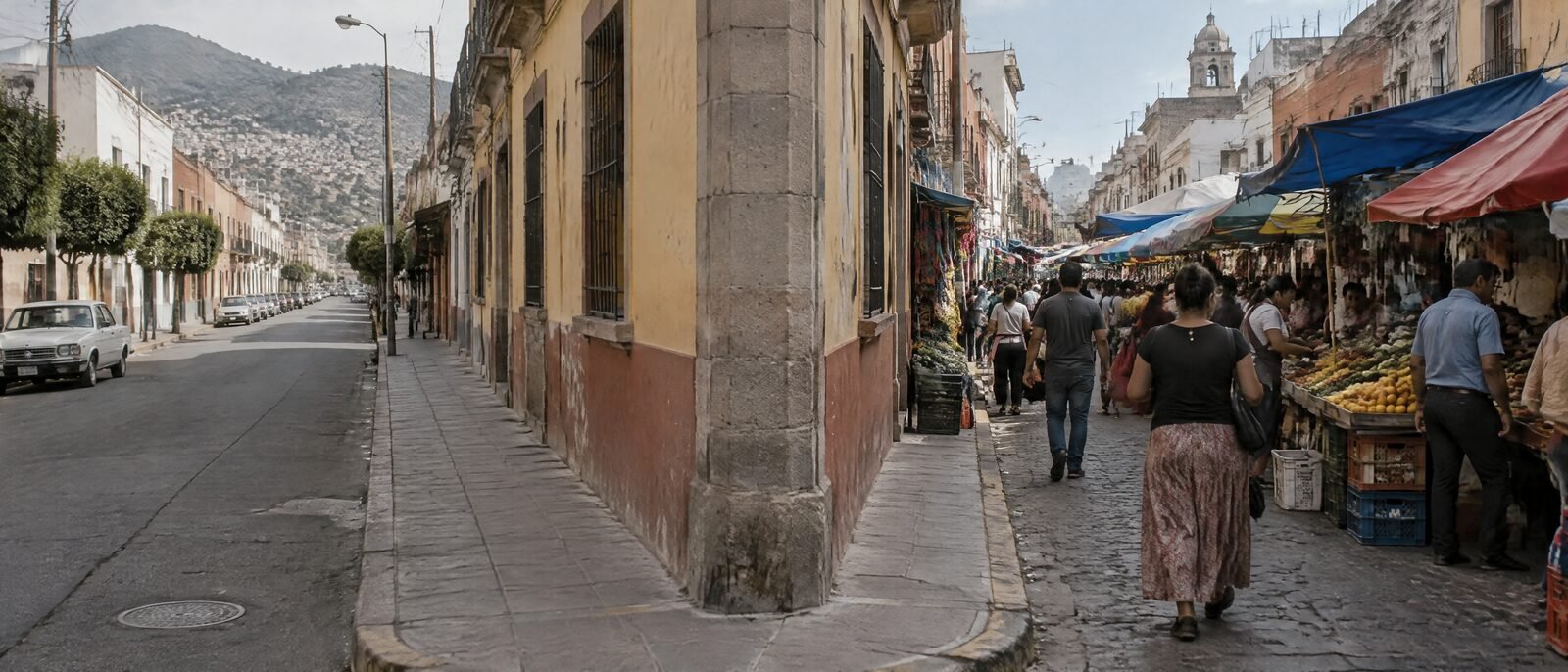
“One of the world’s most dangerous cities”
CDMX recorded 817 homicides in 2025 — 9 per 100,000, down 16.4% (INEGI via La Razón, 3 Aug 2026). Against the Rochester Institute of Technology’s 2024 rates for 24 US cities: St. Louis 54.4, New Orleans 34.7, Detroit 32.1, Washington D.C. 27.3, Chicago 21.7, Dallas 14.0, Pittsburgh 13.8 — then Mexico City at 9, Denver 8.4, Los Angeles 7.1, New York 4.7 (RIT CPSI). Caveats: the CDMX figure is preliminary 2025, the US figures 2024 from local agency and news sources, and this is the 16-borough entity, not the 21-million metro area. No plausible adjustment moves it above Chicago.
“The Metro is dangerous — take a taxi”
The evidence points the other way. Criminal incidence inside the Metro fell 63% between May 2025 and June 2026, and the system reports one offence per 1.6 million journeys (Eje Central, 1 Aug 2026). It does log over 5,000 robbery files a year, more than any other mode — because it carries more passengers than all of them combined. Meanwhile the street-hailed libre taxi is the only mode US diplomats are forbidden to use, and the one the city prosecutor ties to express kidnapping. The ranking: Metro and Metrobús, then app-hailed Uber or DiDi, then a sitio from an authorised rank, and never the cab you flag.
“Skip the ice and the street food and you’re fine”
The CDC says that framing doesn’t hold. “Boil it, cook it, peel it, or forget it” was tested, and people who follow those rules still get ill; restaurant hygiene and sanitation are the larger contributors (CDC Yellow Book 2026). A busy stall cooking in front of you can be lower risk than a mid-range restaurant whose cold chain broke overnight. Attack rates run 30–70% over two weeks. None of this means drink the tap water — it means plan for treatment, not just avoidance.
If something happens
911 is correct here, and the embassy is not where three official pages still say it is.
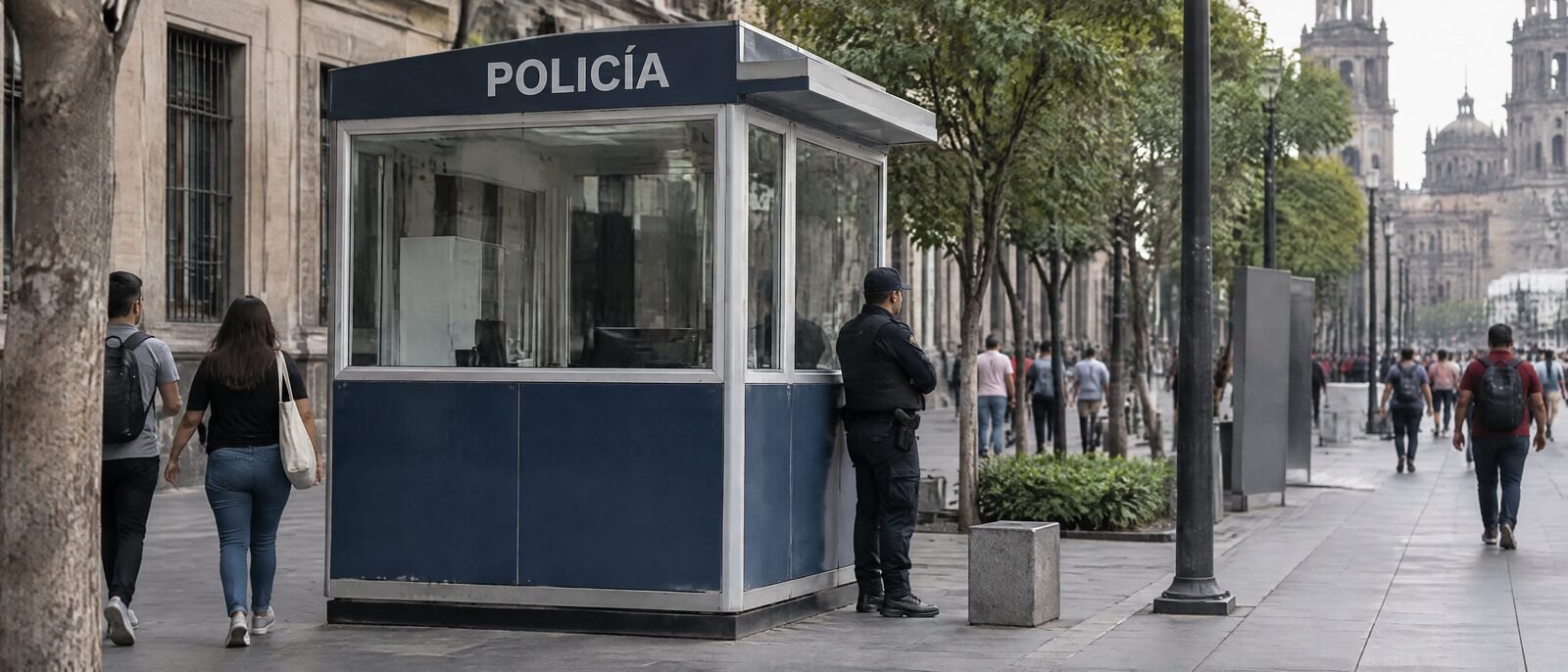
The numbers, and how to actually report
911All read from the Mexico City government’s own English-language visitor page on 20 August 2026 (mexicocity.cdmx.gob.mx). 911 is the national number for police, fire and ambulance — confirmed by the city government, the State Department and the FCDO, and operators get your location automatically. LOCATEL, the non-emergency line, is 55 5658 1111, with English-speaking staff per the FCDO. The Tourist Assistance Hotline is 55 5286 7097, Monday to Friday 09:00–18:00 — not a 24-hour line. 078 is free tourist information and Green Angels roadside assistance. No official page gave the Policía Turística a direct public number, so any you see quoted is unconfirmed.
Health and environment
The altitude and the ground deserve more attention than the crime figures.
2,240 metres, the air, and the water
Feb–May is worstThe CDC Yellow Book puts a first-night sleeping altitude below 2,750 m in the low-risk category, acetazolamide explicitly not indicated; the historic centre is 2,240 m (CDC, reviewed 23 Apr 2025). What arrivals get is breathlessness on stairs, a broken first night and dehydration, not mountain sickness. By mid-March 2026 the Valley of Mexico had 10 days under environmental contingency, double the 2025 figure (El Sol de México, 13 Mar 2026). Best air July to September.
The alarm, and the minute after it
Do not runThe city sits on the drained lakebed of Lake Texcoco, and soft sediment amplifies waves from earthquakes centred hundreds of kilometres off. SASMEX broadcasts over more than 13,000 loudspeaker posts; the alert sounds for a full minute, high-pitched and repetitive so it cannot be mistaken for a siren, and tests run at noon on the first Monday of each month. Warning times of 20 to 120 seconds are widely cited but unconfirmed; the FCDO gives about 60 seconds for the 911 CDMX app, and none for a shallow local event.
Go anywhere. Come back.
Mexico City asks for two habits and hands back the rest of the trip. Advisories, protest routes and airport rules all moved during 2026 — check what has changed, then run the pre-trip list. Other cities are in destinations.