Ipanema and Leblon:
zero homicides, first quarter 2026.
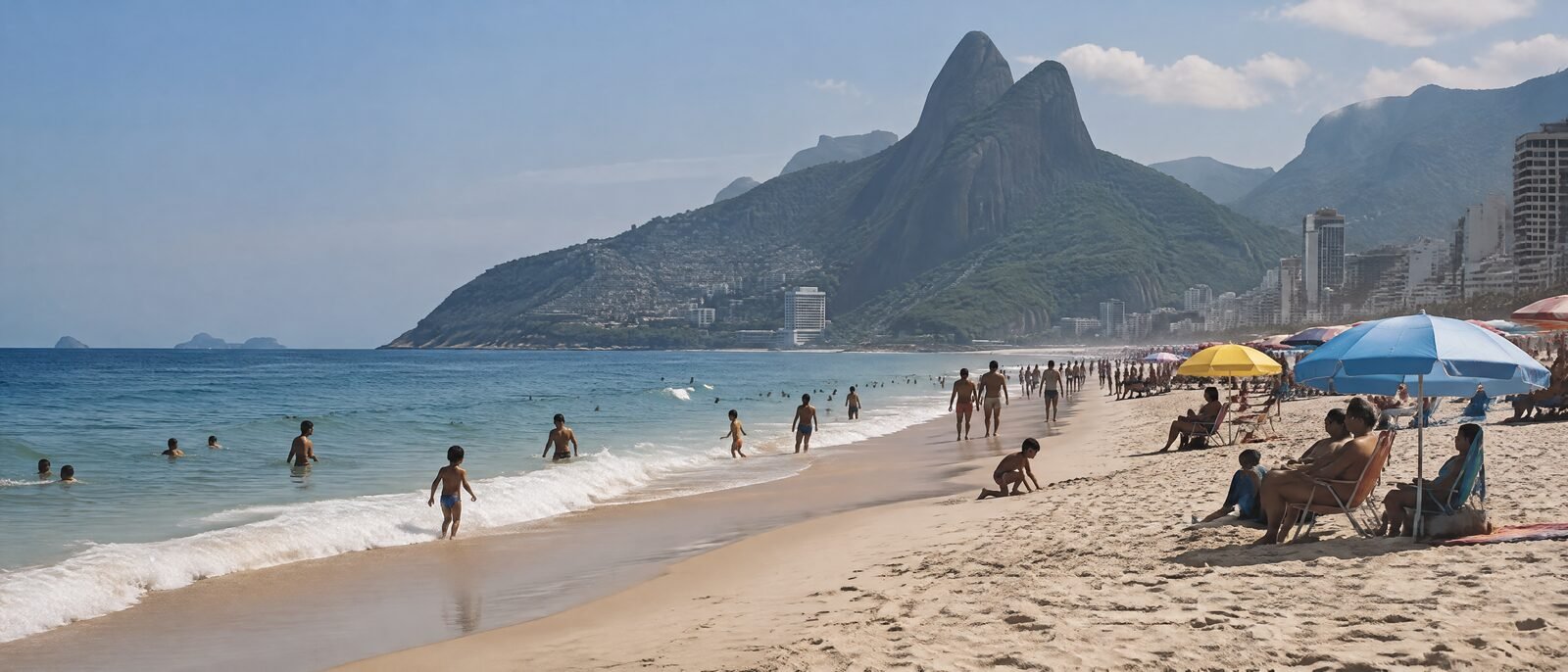
Rio and São Paulo are two different risk pictures wearing one advisory. The US State Department added kidnapping as a formal risk indicator for Brazil in May 2026 — a real, recent change, not a fixture — and the crime that actually reaches a visitor is smaller and more specific: a phone taken between 4 and 9pm, a rideshare that isn’t the one the app matched, a drink at a bar arranged through a dating app. Rio's own security data puts zero homicides in Ipanema and Leblon for the first quarter of 2026. Same country, same advisory, sharply different street.
The advisory, in plain words
Kidnapping is a new indicator, not an old one. Neither government tells you to avoid Rio or São Paulo.
US — Level 2, exercise increased caution
31 Aug 2026Updated 31 August 2026. Indicators: Crime, and Kidnapping/Hostage-taking — kidnapping was added as a formal indicator only in late May 2026, which is worth knowing as a recent, real change rather than a long-standing fixture. Reporting on the advisory's city-level detail describes assaults involving drugs or sedatives placed in drinks as most notable in Rio, sometimes arranged through dating apps or at bars, with Ipanema and Copacabana beaches described as having regular patrols alongside a warning to avoid specific favela complexes. São Paulo is separately described as the more stable environment of the two for business and leisure travel.
UK — FCDO, and the newest line is about taxis
9 Sep 2026Last updated 9 September 2026; the changelog names one change — updated information about taxi travel. Its current wording: "there have been reports of express kidnappings, assaults and robberies from unlicensed taxis, including in cars using fraudulent ride-hailing accounts, such as Uber." The fix given is specific: book only through the official app, wait somewhere already identified as safe, verify the plate and driver photo match the app before getting in, and watch for the car deviating from the route the app shows.
What actually happens
Four patterns, each with a specific tell rather than a general warning.
Phone snatching, on a specific clock
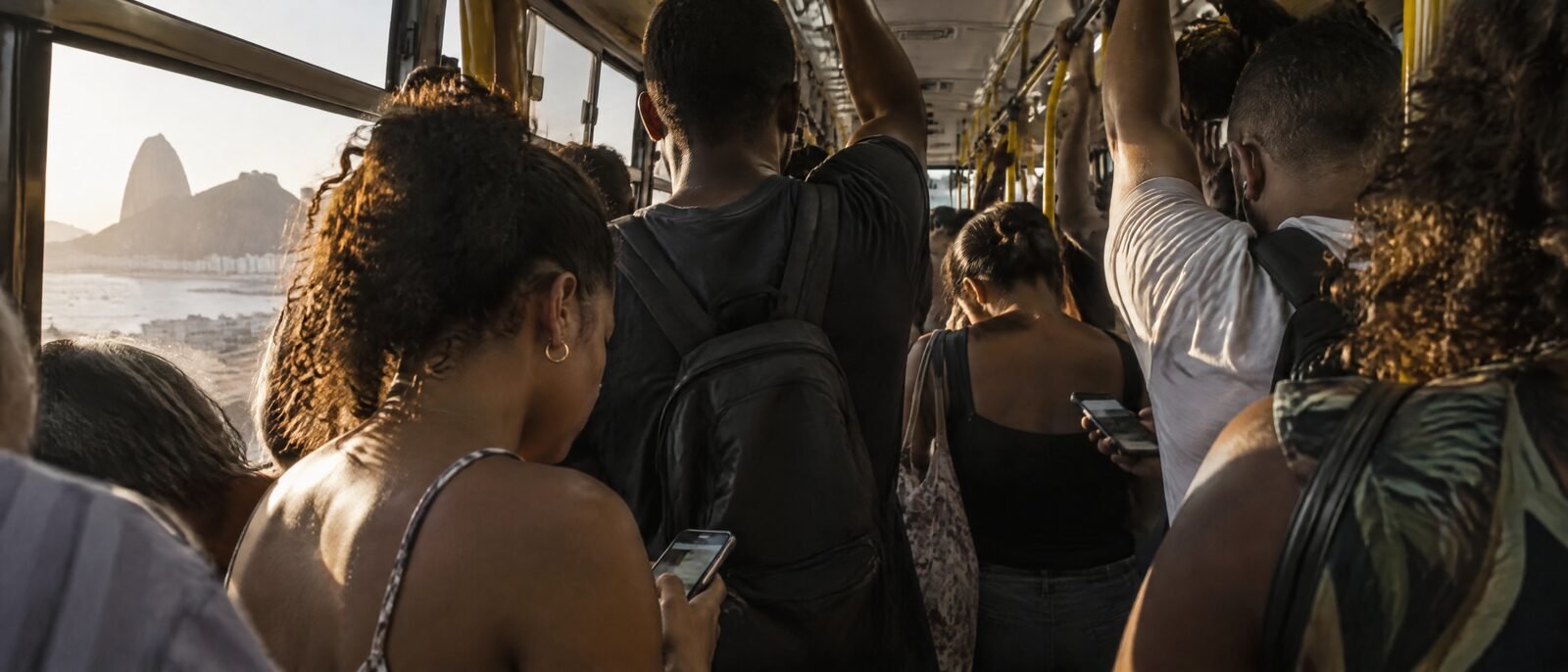
4pm–9pmThe FCDO is unusually precise here: "thieves target mobile phones, particularly between 4pm and 9pm," alongside a general note that "pickpocketing is common." This is the golden-hour-to-early-evening window when streets are busy, light is dropping, and a phone out for a photo or a map is an easy grab-and-run target on foot or from a passing bike.
Express kidnapping and the ATM walk
Pink-marked notesThe FCDO: "short-term opportunistic kidnapping (called 'express kidnapping') can happen. Victims have been kidnapped for a short period of time and driven to an ATM to withdraw money before being abandoned." Separately, a specific and unusual tell on ATM fraud: "if you withdraw cash at an ATM and the cash has pink marks on it, speak to the bank (or police) straight away to get it changed" — a sign of a tampered machine.
Rideshare and taxi fraud
Verify before you get inThe FCDO's newest update, verbatim: reports of "express kidnappings, assaults and robberies from unlicensed taxis, including in cars using fraudulent ride-hailing accounts, such as Uber." The pattern is a driver using a cloned or borrowed account so the app shows a booking that doesn't match who actually arrives.
Dating apps, drink spiking, and beach arrastões
Buy your own drinkThe FCDO: "dating apps have been used by criminals to target foreign nationals in Brazil, leading to spiking of drinks, robbery and theft from bank accounts." On beaches, a distinct group-theft pattern has its own name: "arrastões," where large groups of thieves run through a section of beach grabbing possessions as they go.
Where you’ll be
Rio's data is neighbourhood-specific; São Paulo's is a different, calmer picture with its own one bounded exception.
Copacabana, Ipanema and Leblon
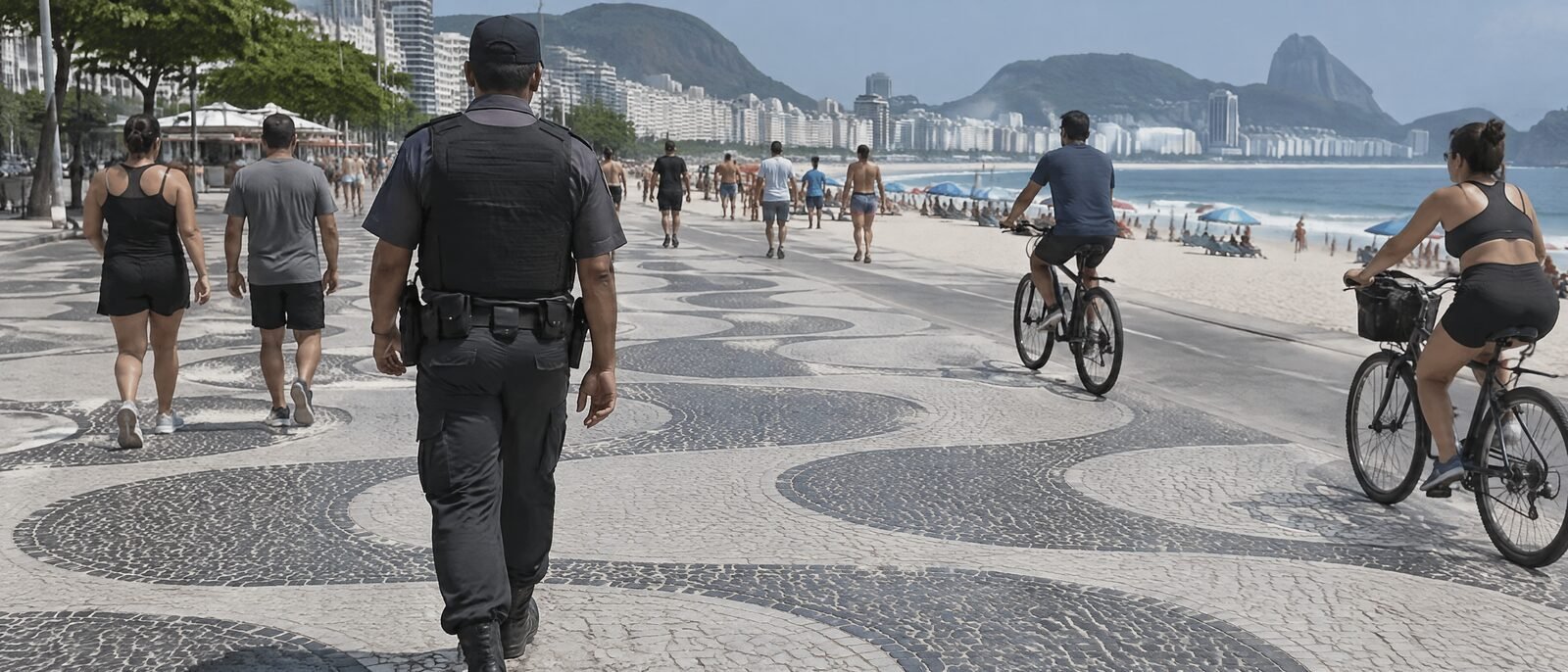
Zero homicides, Q1 2026Rio's Instituto de Segurança Pública (ISP-RJ) recorded zero homicides in Ipanema and Leblon in the first quarter of 2026. Since 12 May 2026, the city's Guarda Municipal has run a 24-hour foot and vehicle patrol of 61 agents across the Copacabana–Ipanema tourist corridor — named streets: Avenida Rainha Elizabeth, Joaquim Nabuco, Francisco Otaviano (the Ipanema–Copacabana connector between Vieira Souto and Avenida NS de Copacabana), Bulhões de Carvalho and Conselheiro Lafaiete — described as the largest single expansion of municipal security in the Zona Sul since the 2016 Olympics. Beach thefts, including arrastões, still occur, and are the more likely everyday risk here than anything violent.
Favela-adjacent viewpoints: named, dated, real
21 Apr 2026On 21 April 2026, a joint Rio–Bahia police operation targeting a Comando Vermelho fugitive triggered a gunfight at the base of Vidigal favela around 6:30am. About 200 tourists on the popular Morro Dois Irmãos sunrise-hike trail, overlooking Ipanema and Leblon, were stranded on the 533m summit for roughly two hours while traffickers blocked the main road below as a diversion. All were evacuated safely by about 7:20am through a police-coordinated corridor with local residents and trail guides; no injuries were reported, two to three arrests were made, and the fugitive escaped. Tourists resumed the same sunrise hike the very next morning.
São Paulo: the calmer of the two, with one bounded exception
Cracolândia, namedThe state of São Paulo recorded Brazil's lowest homicide rate among states, roughly 5.5–5.7 per 100,000 in 2025 (SSP-SP/Fórum Brasileiro de Segurança Pública); January–April 2026 was the state's safest such period on record since 2001, with robberies down 18% to the lowest total ever recorded for that window. Using a different methodology, the Atlas da Violência 2026 (IPEA and the same Fórum, released 26 May 2026, using 2024 data) puts the city of São Paulo at 15.3 homicides per 100,000, ranking it 5th safest among Brazil's state capitals. Those two figures measure different things and aren't directly comparable to each other or to Rio's; both are given rather than one selected to make a cleaner story.
Getting around
Metro first, BRT second, conventional buses in daylight only, rideshare verified before you board.
Metro, BRT and buses
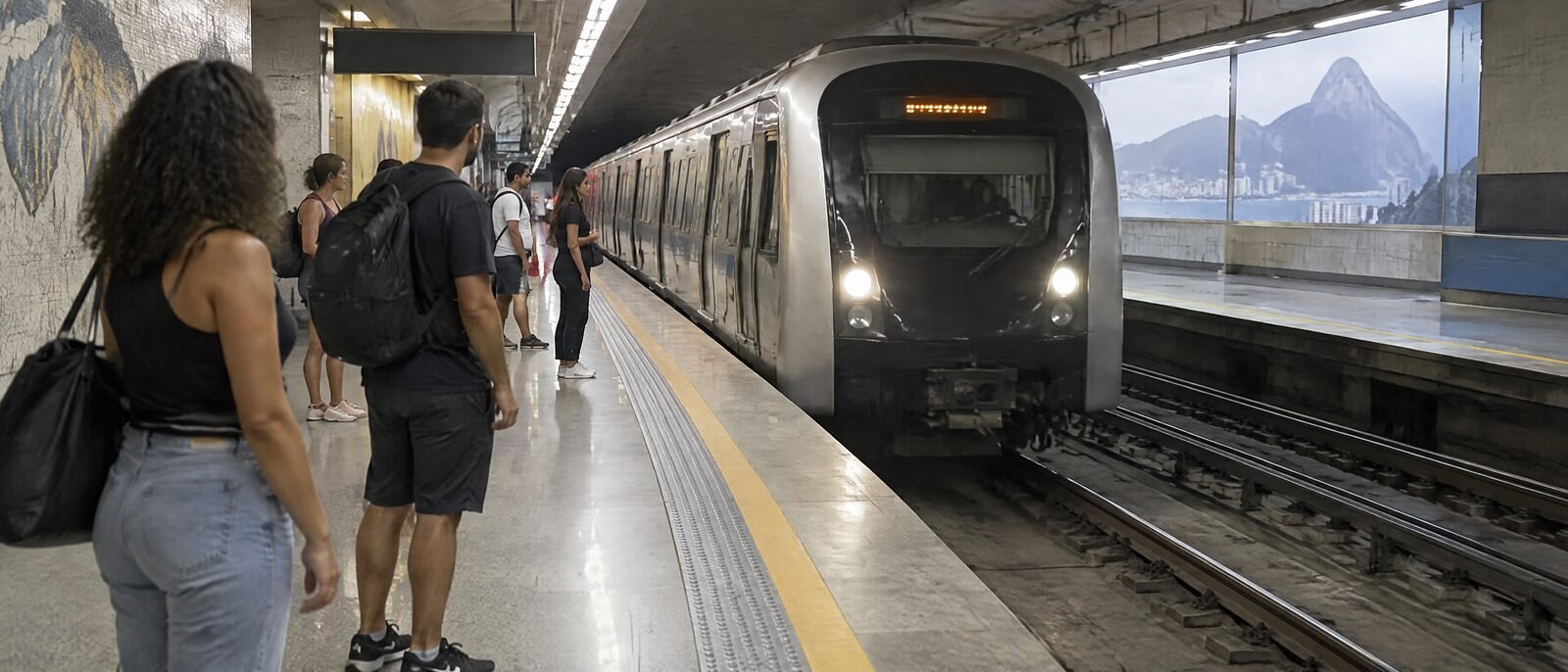
Enclosed beats open-airRio's metro reaches the Zona Sul directly and is widely regarded as one of the safer ways to move around the city. The BRT corridors — Troncal 1 running Copacabana and Ipanema up to Centro, Troncal 3 running Leblon to Centro via Flamengo — use enclosed, dedicated-lane stations and are a step up from conventional buses. Ordinary city buses are fine in daylight on tourist routes (Copacabana, Ipanema, Botafogo, Centro) but get crowded and pickpocket-prone at rush hour, and caution is warranted after dark or off the main tourist routes.
Rideshare and taxis
Match the plate firstBook through the official app rather than hailing on the street, and treat the September 2026 FCDO update as current: verify the plate and driver photo against the app before opening the door, and note if the route on your phone diverges from the road you're actually on.
Widely believed and wrong
One myth flattens two very different cities into one, one erases real recent security gains, and one invents a number nobody published.
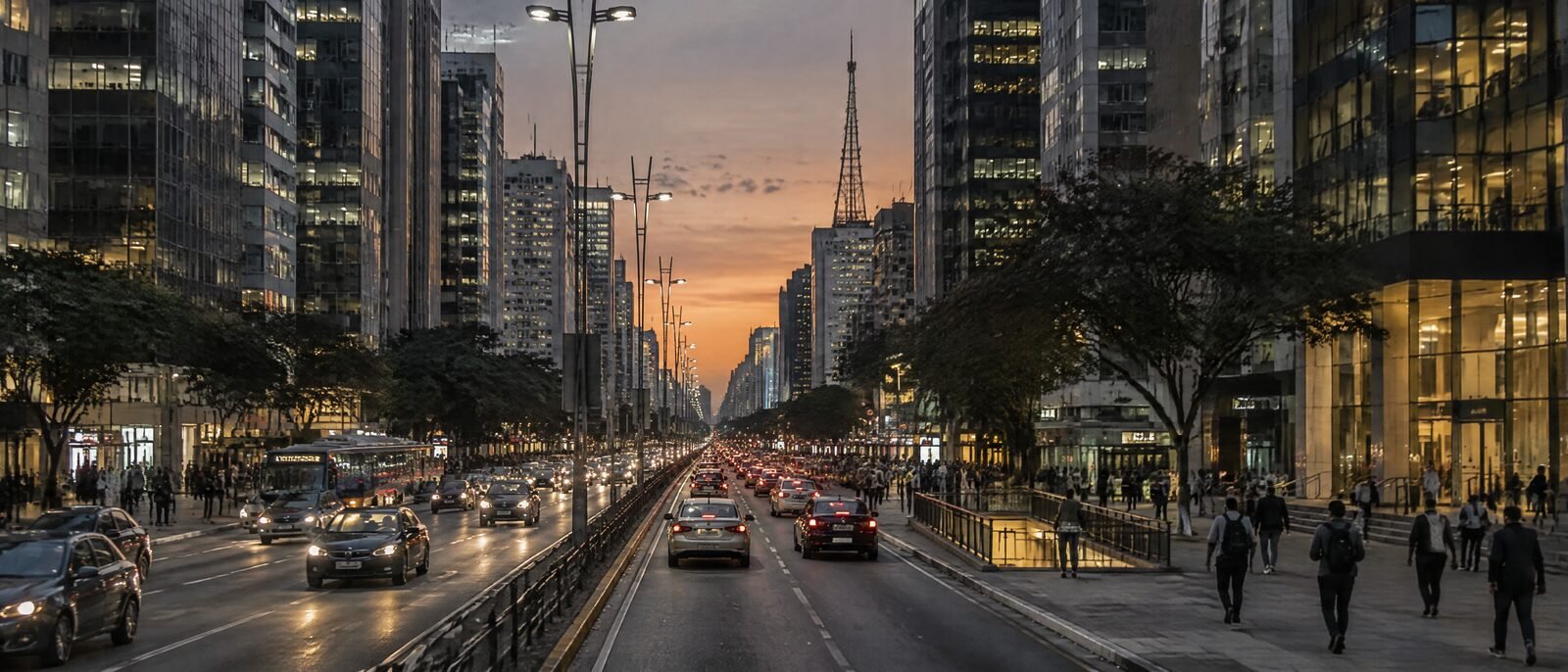
“Rio and São Paulo are the same risk”
They aren't, on the numbers each government and each city's own security data actually publish. São Paulo state posts Brazil's lowest homicide rate among states; Rio's Zona Sul tourist corridor recorded zero homicides in Ipanema and Leblon in Q1 2026, while the city's wider figure sits far higher because it includes favela complexes visitors have no reason to enter. Treating them as one number erases exactly the geography that determines actual risk.
“Nothing has gotten safer here”
Rio's 2024 murder count was its lowest since 2015, 2025 brought a further roughly 8% drop in homicides, and early 2026 reporting describes an additional 12% fall in violent lethality. São Paulo state's January–April 2026 was its safest such stretch on record since 2001. A 61-agent municipal patrol expansion went live in Rio's Zona Sul in May 2026. These are real, dated, measurable improvements, not marketing.
“There's one official murder rate for São Paulo”
There isn't, and printing a single number would be inventing precision that doesn't exist. The state's own SSP-SP data puts 2025's rate at roughly 5.5–5.7 per 100,000; the separately-run Atlas da Violência, using a different methodology and 2024 data, puts the city at 15.3. Both are real, both are cited here with their source, and neither is quietly dropped in favour of whichever sounds better.
If something happens
Four numbers, each for a different service, and a dedicated line for foreign visitors.
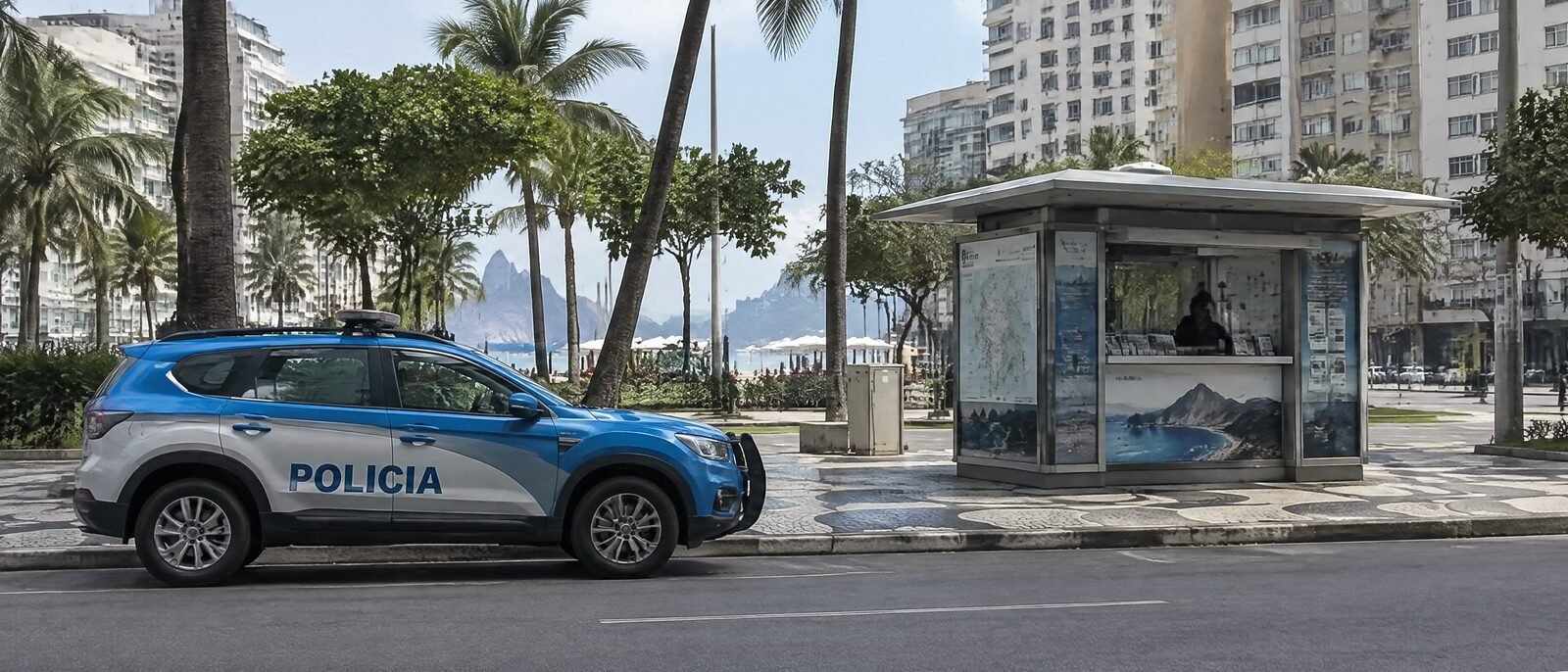
Emergency numbers
Police 190 · Ambulance 192Police 190, ambulance/SAMU 192, fire 193, civil defence 199 — all toll-free, 24 hours. 911 does not work in Brazil, and 112 is reported unreliable here — do not assume either will connect the way it might elsewhere. Operators mostly speak Portuguese only.
Health and environment
Heat, sun and water are the parts of this trip most guides underplay.
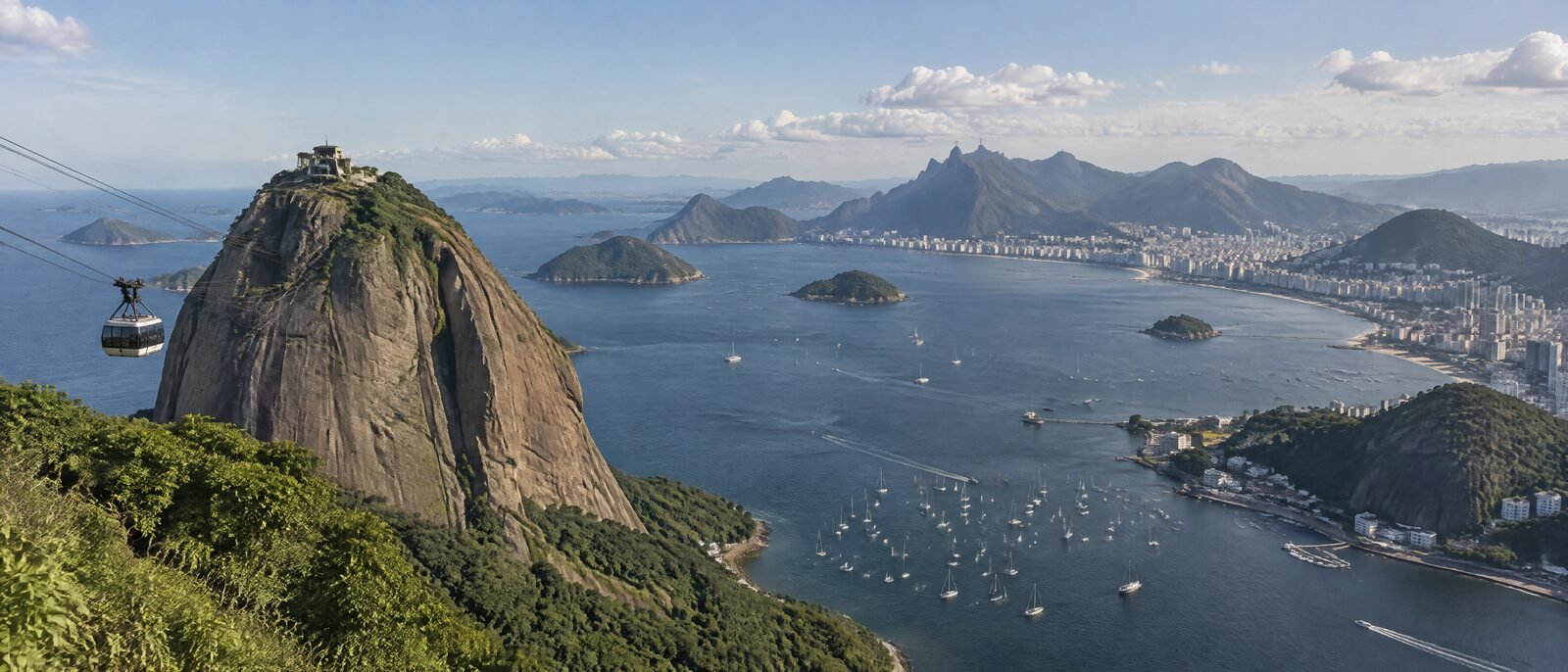
Sun, heat and the beach day
Reapply, don't assume shadeRio and São Paulo both sit close enough to the equator that UV exposure is intense year-round, and a beach day in Ipanema or Copacabana is the most common way visitors get sunburned or heat-affected. Standard practice applies at full strength here: reapply sunscreen after swimming, hydrate more than feels necessary, and treat midday hours as the ones to spend in shade rather than on the sand.
Water and food
Bottled in most citiesTap water quality varies significantly by city and neighbourhood in Brazil; bottled or filtered water is the safer default outside a small number of major-city systems known to be reliable. Street food in Rio and São Paulo is widely eaten and generally fine at busy, high-turnover stalls, the same rule of thumb that applies across most of the world: eat where the line is long and the food is cooked in front of you.
Go anywhere. Come back.
Brazil's real risk list is short and geographic: the 4-to-9pm phone window, the unverified rideshare, and one bounded São Paulo street cluster. Advisories change without notice — check what has moved, then run the pre-trip list once.